

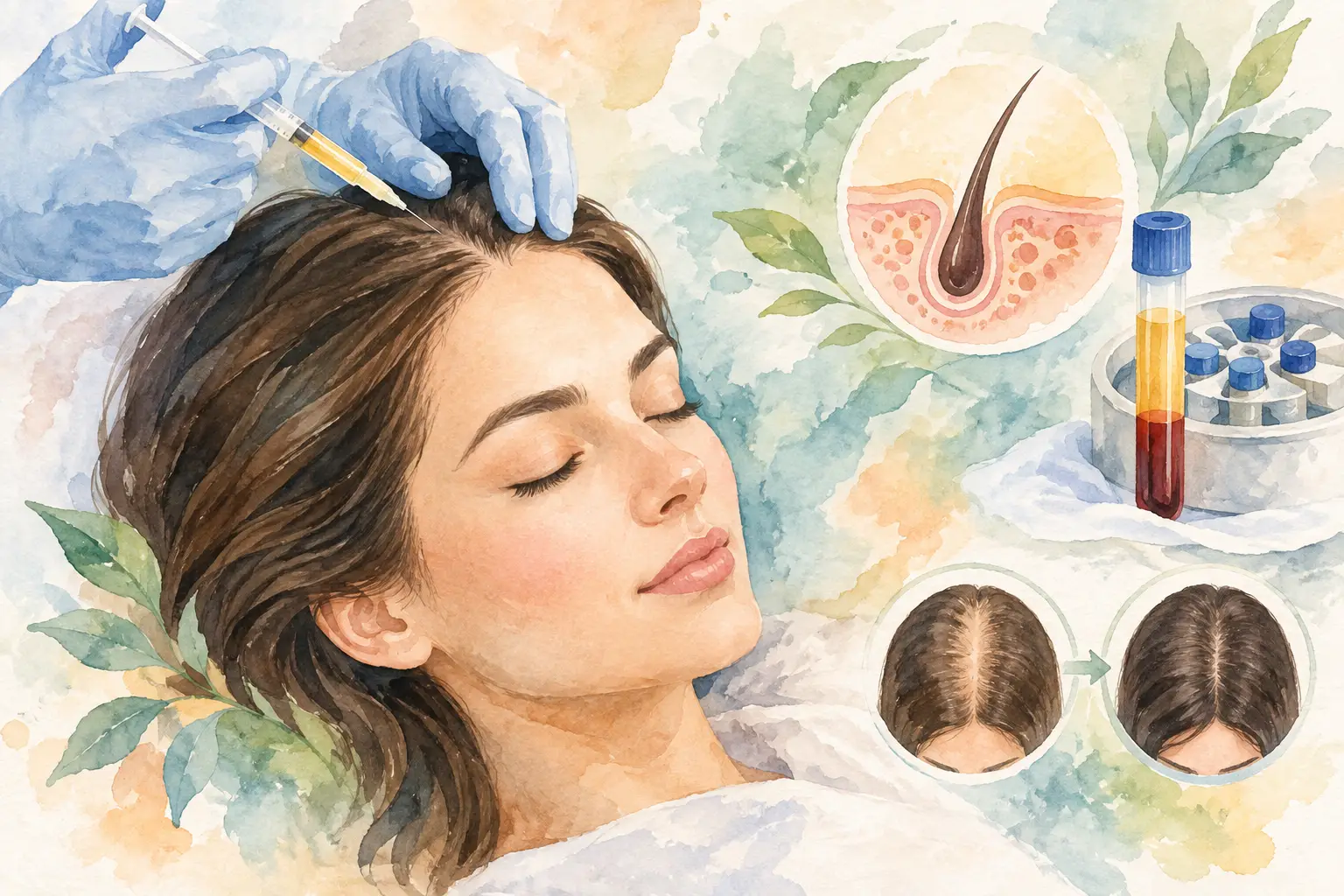
Hair thinning can feel deeply personal. You may notice more scalp at the part line, a widening hairline, or a ponytail that no longer feels as full as it once did. This guide to PRP scalp therapy explains how a natural, non-surgical treatment may support healthier-looking hair growth while fitting into a busy life with minimal downtime.
PRP is not a quick cosmetic cover-up. It is a medical-grade treatment designed to support the follicles that are still capable of producing hair. For the right candidate, it can be a meaningful part of a larger plan to help you feel more like yourself again.
What Is PRP Scalp Therapy?
PRP stands for platelet-rich plasma. Platelets are components of your blood that contain growth factors, which help support the body’s natural repair processes. During PRP scalp therapy, a small sample of your blood is drawn and placed in a centrifuge. This separates the platelet-rich plasma from other blood components.
That concentrated plasma is then carefully introduced into areas of thinning on the scalp through a series of small injections. The goal is to create a healthier environment around the hair follicles and encourage them to remain active longer.
PRP uses your own blood, which is one reason many people are drawn to it. There is no donor material and no surgical incision. Still, it is a medical treatment, not a guarantee of regrowth. Results depend on the cause and stage of hair loss, your overall health, and the consistency of your treatment plan.
Who May Be a Good Candidate for PRP?
PRP scalp therapy tends to be most helpful for adults experiencing early to moderate thinning, especially when follicles are weakened but have not stopped functioning entirely. It is commonly considered for hereditary hair thinning in both women and men, diffuse thinning, and early changes around the hairline, temples, or crown.
A consultation matters because hair loss is not one-size-fits-all. Stress, hormonal shifts, nutritional deficiencies, medications, autoimmune conditions, recent illness, and genetics can all play a role. A provider should review your health history, examine your scalp, and discuss when further medical evaluation may be appropriate before recommending treatment.
PRP may not be the best standalone option when hair loss has progressed to smooth, scarred areas with no active follicles. It may also need to be delayed or avoided for people with certain platelet disorders, active scalp infections, uncontrolled medical conditions, or blood-related concerns. Pregnancy, breastfeeding, and medications that affect clotting should be discussed directly with a qualified medical provider.
The most encouraging candidates are often those who begin treatment before thinning becomes advanced. Acting early does not mean rushing into a procedure. It means getting clear answers while there is more opportunity to support your existing hair.
What Happens During a PRP Scalp Treatment?
A PRP appointment generally begins with a blood draw, similar to routine lab work. Your sample is processed in a centrifuge to isolate the platelet-rich portion. While the plasma is prepared, the treatment area is cleansed and your provider may apply or discuss comfort measures.
The PRP is placed across targeted areas of the scalp using precise, shallow injections. Treatment time varies based on the size of the area, but many appointments can be completed within about an hour. Most clients describe a brief pinching or pressure sensation rather than prolonged discomfort.
Because PRP is customized from your own blood, preparation is especially important. Your provider may ask you to arrive well hydrated and may review supplements or medications before treatment. Do not stop prescribed medication unless the clinician managing that medication tells you to do so.
At Reveal MedSpa, the focus is not simply on administering a treatment. It is on understanding what you are seeing in the mirror, creating a plan that respects your schedule, and helping you pursue visible improvement with compassionate, medically guided care.
Recovery: What to Expect After PRP
One of the practical benefits of PRP scalp therapy is that recovery is typically minimal. You may have temporary tenderness, mild swelling, pinpoint bleeding, redness, or a tight sensation across the treated area. These effects usually settle quickly, often within a day or two.
Your provider will give you personalized aftercare instructions. In many cases, clients are advised to avoid washing their hair for a period after treatment, skip strenuous exercise until the next day, and hold off on heat styling, hair coloring, or harsh scalp products for a short time. Sun protection for the scalp is also wise, particularly if thinning makes the skin more exposed.
Avoid planning an important photo event or major occasion immediately after your first session. While downtime is low, a little redness or sensitivity is possible. Giving yourself a day or two of flexibility can make the experience more comfortable.
Call your provider if you experience symptoms that seem unusual or worsen rather than improve, such as significant pain, increasing redness, fever, or drainage. These concerns are uncommon, but clear communication is part of good care.
When Will You See Results?
Hair grows slowly, so PRP requires patience. Some people first notice less shedding or improved hair texture over the following months. Visible changes in density and fullness often take several months, and results may continue to develop over time as the hair cycle progresses.
A common protocol includes a series of initial treatments spaced several weeks apart, followed by maintenance sessions based on your response and goals. The exact schedule varies. Someone with recent diffuse thinning may have a different plan than someone managing long-term genetic hair loss.
Photos can be more helpful than memory when tracking progress. Consistent photos in the same lighting, angle, and hairstyle can reveal gradual changes that are easy to miss day to day. Your provider may also monitor your response through scalp assessment and conversations about shedding, styling, and confidence.
Be cautious with promises of dramatic results after one appointment. A credible treatment plan sets realistic expectations: PRP may improve the appearance of density, reduce shedding for some people, and support stronger-looking hair, but it cannot recreate follicles that are no longer viable.
PRP Works Best as Part of a Personalized Hair Plan
For some clients, PRP is effective on its own. For others, better results come from pairing it with clinician-recommended topical therapies, nutritional support when a deficiency is present, hormonal evaluation, or other hair restoration options. The right combination depends on why the thinning began.
This is where whole-body wellness can matter. Poor sleep, major stress, rapid weight changes, low iron, thyroid concerns, and hormonal changes may affect the hair-growth cycle. Addressing internal health does not replace targeted scalp treatment, but it can help create stronger conditions for your goals.
A personalized plan should also account for what is realistic for you. If frequent appointments are difficult because of work, family, or travel, say so. A plan you can follow consistently is more valuable than an aggressive schedule that does not fit your life.
Questions to Ask Before You Book
Before choosing PRP scalp therapy, ask who will perform the treatment, how your candidacy will be evaluated, and what results are realistic for your specific pattern of loss. You should also understand the number of sessions recommended, the expected maintenance schedule, total cost, and what other treatments may be suggested if PRP alone is unlikely to meet your goals.
Look for a practice that treats hair thinning as a medical and emotional concern, not just a cosmetic inconvenience. You deserve honest guidance, clear aftercare, and a provider who will tell you when a different approach may serve you better.
Hair changes rarely happen overnight, and meaningful improvement asks for consistency. The first step is simply giving your concerns the attention they deserve. With a thoughtful evaluation and a plan built around your goals, fuller-looking hair may feel less like a distant wish and more like a confident next step.