

More hair in the shower drain, a widening part, or a hairline that no longer frames your face the same way can feel deeply personal. Understanding how PRP treats thinning hair can help you decide whether this non-surgical approach fits your goals, your schedule, and the kind of results you hope to see.
PRP, or platelet-rich plasma, uses a concentrated portion of your own blood to support healthier activity around the hair follicles. It is not a hair transplant, and it does not create new follicles where none remain. Instead, it is designed to support weakened but still viable follicles, which may help slow progressive thinning and encourage fuller-looking growth over time.
How PRP Treats Thinning Hair at the Follicle Level
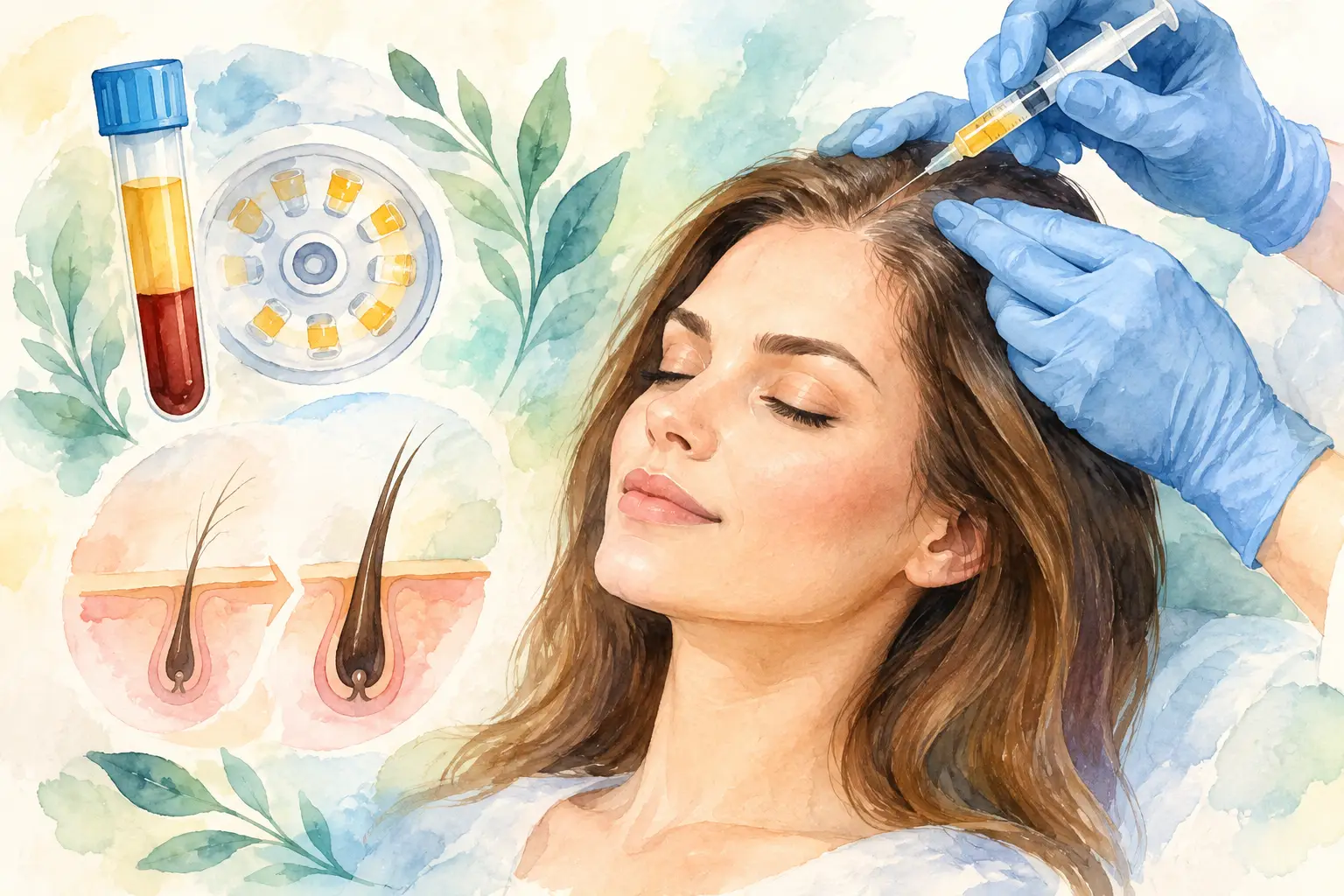
Your blood contains platelets, small components best known for their role in healing. Platelets also carry naturally occurring growth factors, which help signal repair processes in the body. During a PRP hair restoration treatment, a small blood sample is collected and placed in a centrifuge. This separates and concentrates the platelet-rich plasma before it is prepared for treatment.
The PRP is then carefully delivered into targeted areas of the scalp where thinning is most noticeable. These growth-factor-rich injections are intended to support the environment around the hair follicle, encouraging circulation and cellular signaling that may help follicles remain in a stronger growth phase.
Hair grows in cycles. Each follicle moves through a growth phase, a transition phase, and a resting phase. In common pattern hair loss, follicles can gradually shrink over time, producing hairs that are finer, shorter, and less visible. PRP may help support miniaturized follicles before they become inactive. That distinction matters: early intervention often offers more opportunity than waiting until an area has been smooth and bare for years.
Results are individual, and PRP is not a guaranteed cure for hair loss. Still, it can be a valuable option for people who want a medical-grade, non-surgical treatment that works with their body rather than requiring significant downtime.
Who May Be a Good Candidate for PRP Hair Restoration?
PRP is often considered for men and women experiencing early to moderate thinning, especially when the follicles are still present. It may be helpful for a widening part, diffuse thinning through the crown, early recession at the temples, or hair that has become noticeably finer over time.
Many clients seeking treatment have androgenetic alopecia, commonly called male-pattern or female-pattern hair loss. This hereditary condition is one of the most common reasons hair gradually loses density. PRP may also be considered after periods of shedding related to stress, illness, hormonal shifts, or nutritional concerns, although the underlying cause should always be evaluated.
A thoughtful consultation is essential because not all hair loss has the same source. Thyroid conditions, iron deficiency, medication changes, autoimmune conditions, rapid weight loss, scalp inflammation, and hormone fluctuations can all contribute to shedding. Addressing the cause alongside the visible concern gives you a more complete path forward.
PRP may be less effective in areas where follicles have been inactive for a long time. It may also be inappropriate for people with certain blood disorders, active scalp infections, uncontrolled medical conditions, or concerns that affect platelet function. Your provider should review your health history, medications, scalp condition, and hair-loss pattern before recommending treatment.
PRP Can Be Part of a Bigger Hair Health Plan
Hair restoration is rarely one-size-fits-all. Depending on your needs, a provider may recommend combining PRP with clinically appropriate topical therapies, oral medications, nutritional support, hormone evaluation, or lifestyle changes that support overall wellness.
This does not mean everyone needs every option. Some clients are looking for a focused treatment plan for early thinning, while others benefit from a broader approach that considers hormones, stress, recovery, or metabolic health. The right plan is the one that is medically appropriate and realistic enough to follow consistently.
What Happens During a PRP Hair Treatment?
A PRP appointment typically begins with a brief blood draw, similar to routine lab work. The sample is processed in a centrifuge to isolate the platelet-rich plasma. While the PRP is being prepared, the scalp is cleansed and the treatment areas are mapped based on your pattern of thinning.
Your provider then uses a series of small injections to place PRP into the scalp. Most appointments are completed in about 45 to 60 minutes, although timing can vary. The sensation is often described as quick pinching or pressure. If you are concerned about discomfort, ask in advance about options that may help you feel more comfortable during the procedure.
There is little to no meaningful downtime for most people. You may have tenderness, mild swelling, redness, or a tight feeling in the scalp for a day or two. Small areas of pinpoint bleeding or bruising can occur. Your provider will give you personalized aftercare instructions, which may include avoiding strenuous exercise, excessive heat, certain hair products, or washing your hair for a short period after treatment.
Because PRP is derived from your own blood, the risk of an allergic reaction to the plasma itself is low. As with any injection treatment, there are still potential risks, including infection, bruising, bleeding, headache, and temporary scalp discomfort. Choosing a qualified medical provider and following aftercare guidance are important parts of keeping treatment as safe as possible.
When Will You See Results From PRP for Thinning Hair?
PRP works with the natural pace of the hair-growth cycle, so patience is part of the process. You are unlikely to walk out of one appointment with visibly thicker hair. Some clients notice less shedding first, followed by improvements in hair texture, strength, or density over the following months.
Many treatment plans begin with a series of sessions spaced several weeks apart. After the initial series, maintenance treatments may be recommended at intervals based on your response, goals, and the cause of your hair thinning. Your provider can create a schedule that fits your scalp health and long-term plan.
For many people, visible changes become easier to assess around three to six months after starting treatment. Progress photos taken in consistent lighting can be especially helpful. Hair growth can be gradual, and daily mirror checks rarely show the full story.
It also helps to set the right expectation: PRP aims to improve the quality and density of existing hair where follicles can still respond. It may reduce the appearance of thinning, but it does not typically recreate the density you had as a teenager or replace a surgical hair transplant when follicle loss is advanced.
Is PRP Worth It for Hair Thinning?
For the right candidate, PRP can be worth considering because it is non-surgical, uses your own plasma, and requires minimal disruption to work, family, and social life. It can be particularly appealing for people who want to take action before thinning becomes more pronounced or who want to complement a broader hair-restoration strategy.
The trade-off is that PRP requires commitment. It is usually performed as a series rather than a single appointment, results vary, and maintenance may be needed to support improvements. Cost is also a consideration, as hair restoration is commonly elective and may not be covered by insurance.
A clear consultation should make those factors easier to weigh. You deserve honest guidance about what PRP may improve, where its limits are, and whether another treatment path would better serve your goals.
At Reveal MedSpa, hair restoration conversations begin with more than a glance at the scalp. They begin with listening to what has changed, what you want to feel when you look in the mirror, and what approach makes sense for your health and lifestyle. If thinning hair has started to affect your confidence, a personalized evaluation can be a practical first step toward feeling like yourself again.