

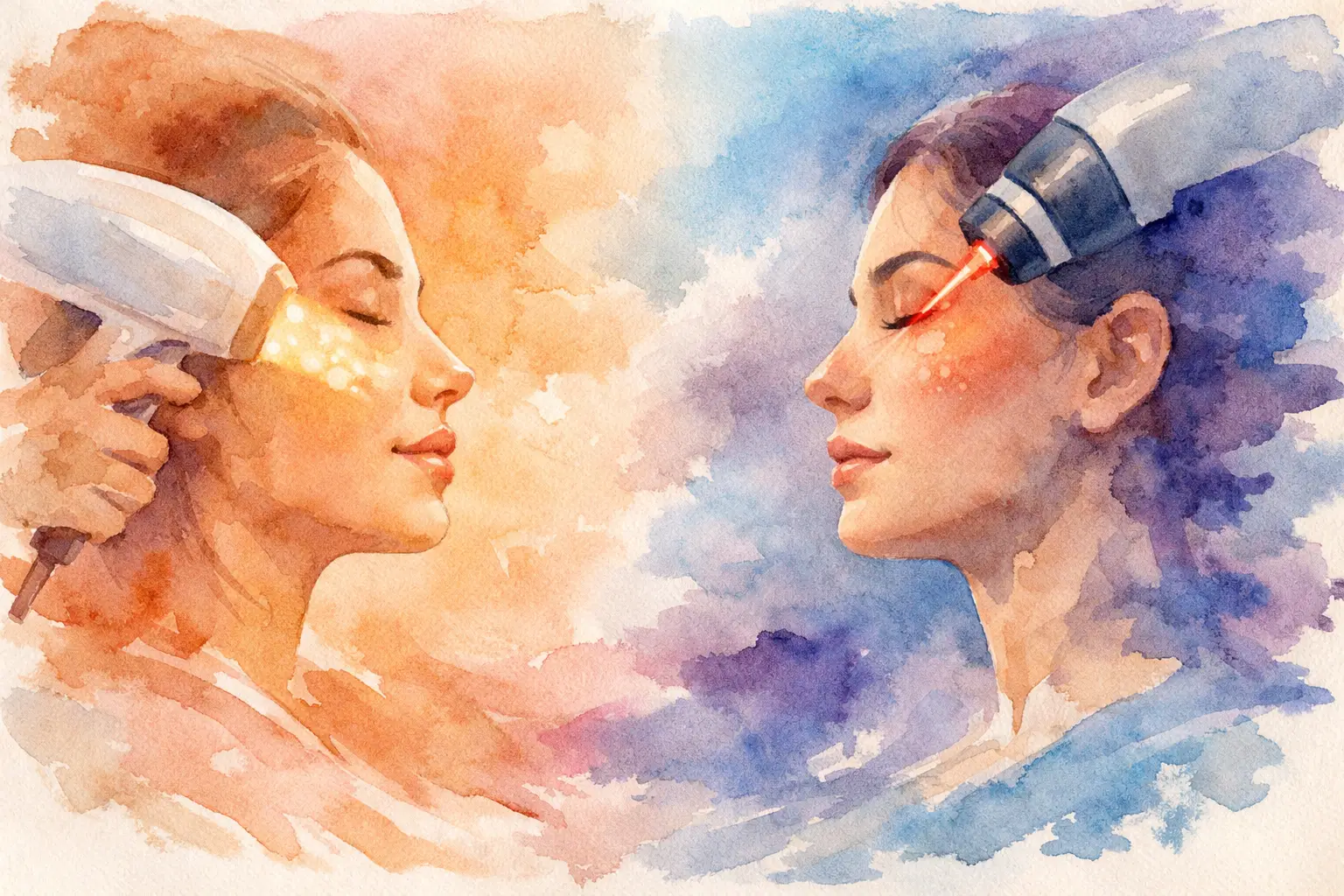
A little discoloration can make skin look tired. Deep acne scars or etched-in lines can make it feel like your reflection no longer matches how energized you feel. When comparing IPL vs laser resurfacing, the right choice comes down to what is happening beneath the surface, how much downtime fits your life, and the level of correction you want to see.
Both treatments can support clearer, more radiant-looking skin without surgery. They are not interchangeable, though. IPL is often a smart choice for unwanted pigment and redness, while laser resurfacing is designed to create more significant change in texture, fine lines, and scarring.
IPL vs Laser Resurfacing: The Core Difference
IPL, or intense pulsed light, is not technically a laser. It uses broad-spectrum light delivered in controlled pulses to target pigment in the skin and, in many cases, visible blood vessels. The light is absorbed by melanin and hemoglobin, helping break up the appearance of sun spots, uneven tone, flushing, and certain types of redness.
Laser resurfacing uses concentrated laser energy to create controlled micro-injuries in the skin. This process stimulates collagen remodeling and skin renewal. Depending on the device and treatment plan, resurfacing may be non-ablative, meaning it heats tissue below the surface with minimal disruption, or ablative, meaning it removes precise layers of damaged skin for more dramatic correction.
Think of IPL as a treatment that can brighten and even the complexion. Laser resurfacing is more often chosen when the goal is to rebuild and smooth the skin’s surface.
What IPL Treats Best
IPL is especially effective when color is the primary concern. Years of Colorado sunshine can leave behind freckles, sun spots, blotchy pigmentation, and persistent redness that makeup only partly disguises. IPL can help create a more even-looking complexion with relatively little interruption to a busy schedule.
Many clients consider IPL for sun damage on the face, chest, neck, or hands. It may also help reduce the appearance of facial redness, small visible vessels, and uneven pigmentation associated with photoaging.
After treatment, darker spots commonly look darker before they fade or flake away. Mild redness, warmth, or temporary swelling can occur, but many people return to regular activities quickly. Makeup may often be worn the next day, depending on your provider’s instructions.
IPL does have limits. It does not remove deep wrinkles, tighten significantly lax skin, or meaningfully correct pitted acne scars. It can improve overall radiance, but it is not the strongest option when texture is the concern you notice first.
IPL may be a good fit if you want to address:
- Brown spots, freckles, and visible sun damage
- Uneven skin tone or dullness
- Facial redness and some small blood vessels
- A refreshed look with minimal downtime
What Laser Resurfacing Treats Best
Laser resurfacing is usually the more powerful choice for skin texture and collagen-related concerns. It can soften the appearance of fine lines, improve crepey texture, reduce acne scarring, refine enlarged pores, and create a smoother, firmer-looking complexion over time.
Ablative laser treatments create a more intensive renewal process. Because they treat the skin more aggressively, they can deliver more visible correction in fewer sessions. The trade-off is recovery. Redness, swelling, peeling, crusting, and sensitivity are expected parts of healing, and social downtime can range from several days to a few weeks depending on the treatment depth.
Non-ablative resurfacing is gentler and generally involves less downtime, but it often requires a series of treatments and patience as collagen builds gradually. Neither approach is automatically better. The ideal option depends on the severity of your concerns, your skin type, and how quickly you need to return to work, events, exercise, or family responsibilities.
Laser resurfacing may be a good fit if you want to address:
- Fine lines and more established wrinkles
- Acne scars or other textural scars
- Rough, uneven, or crepey skin texture
- Enlarged pores and loss of smoothness
- More substantial signs of sun-related aging
Results: Brightening Versus Rebuilding
The results timeline is one of the clearest distinctions between IPL and laser resurfacing. IPL changes can become visible as treated pigment darkens and sheds, often over one to two weeks. A series of sessions may be recommended for more complete improvement, particularly when pigment or redness is widespread.
Laser resurfacing results tend to unfold in stages. After the initial healing period, skin may look smoother and fresher. The deeper benefit continues as collagen production and remodeling progress over several months. This is why resurfacing can be such a meaningful investment for clients who want to address longstanding texture concerns rather than simply brighten the complexion.
Neither treatment stops future sun damage or the natural aging process. Consistent sunscreen use, a thoughtful skincare routine, and maintenance treatments help protect your results. For some clients, IPL and resurfacing are used at different points in a long-term skin plan because they address different visible concerns.
Downtime Matters, Especially in Real Life
The best treatment is not always the most aggressive one. A client preparing for a wedding, professional photos, or an important presentation may prefer IPL because recovery is usually easier to manage. Someone who has more flexibility and wants a stronger correction for acne scars or deep texture may feel that laser resurfacing is worth the healing time.
With IPL, most people experience temporary pinkness and darkened pigment. With laser resurfacing, the recovery process is more involved and requires diligent aftercare. Your skin may feel tight, warm, and sensitive. You will need to follow instructions for cleansing, moisturizing, sun avoidance, and activity restrictions closely.
There is no prize for choosing the treatment with the most downtime. There is value in choosing a plan you can follow well and feel confident about.
Skin Tone, Skin Health, and Safety
A personalized consultation is essential for both IPL and laser resurfacing. Light-based treatments must be selected carefully for your skin tone, history of pigmentation, active skincare products, medications, and recent sun exposure. Inappropriate settings or poor timing can increase the risk of post-inflammatory hyperpigmentation, burns, or uneven results.
Darker skin tones can absolutely benefit from advanced aesthetic treatments, but the technology, settings, and preparation need to be chosen thoughtfully. Your provider may recommend pre-treatment skincare, a different device, a chemical peel, microneedling, or another approach if IPL or a particular laser is not the safest first option.
You should also postpone treatment if you have an active infection, open skin, a current cold sore outbreak in the treatment area, or a recent tan. Be open about your medical history and skincare routine. Products containing retinoids, exfoliating acids, or certain medications may need to be paused before treatment under clinical guidance.
Can You Combine IPL and Laser Resurfacing?
Sometimes, yes, but not usually on the same day or without a strategic plan. A provider may recommend IPL first to address pigment and redness, then use resurfacing later to focus on texture and collagen renewal. In other cases, laser resurfacing may be the priority, followed by IPL maintenance once the skin has fully healed.
Other treatments can complement either approach. Microneedling or RF microneedling may support collagen goals with a different recovery profile. Diamond Glow facials and medical-grade skincare can help maintain clarity and hydration between more intensive appointments. The most effective plan is rarely about one device alone. It is about matching the right treatments to your skin, timeline, and goals.
Choosing the Right Treatment for Your Goals
Choose IPL when your biggest concern is visible color: sun spots, blotchiness, redness, or a complexion that looks less even than it once did. Choose laser resurfacing when you are focused on the feel and structure of your skin: lines, scars, pores, roughness, or more advanced texture changes.
At Reveal MedSpa, treatment recommendations begin with listening to what you see in the mirror and what matters in your schedule. A medically guided consultation can clarify whether IPL, ablative laser resurfacing, another treatment, or a customized combination is the best next step.
Your skin does not need to look filtered to look healthy, rested, and like you. The right treatment plan should help you feel comfortable showing up with confidence, while respecting your skin’s needs and your real life.