

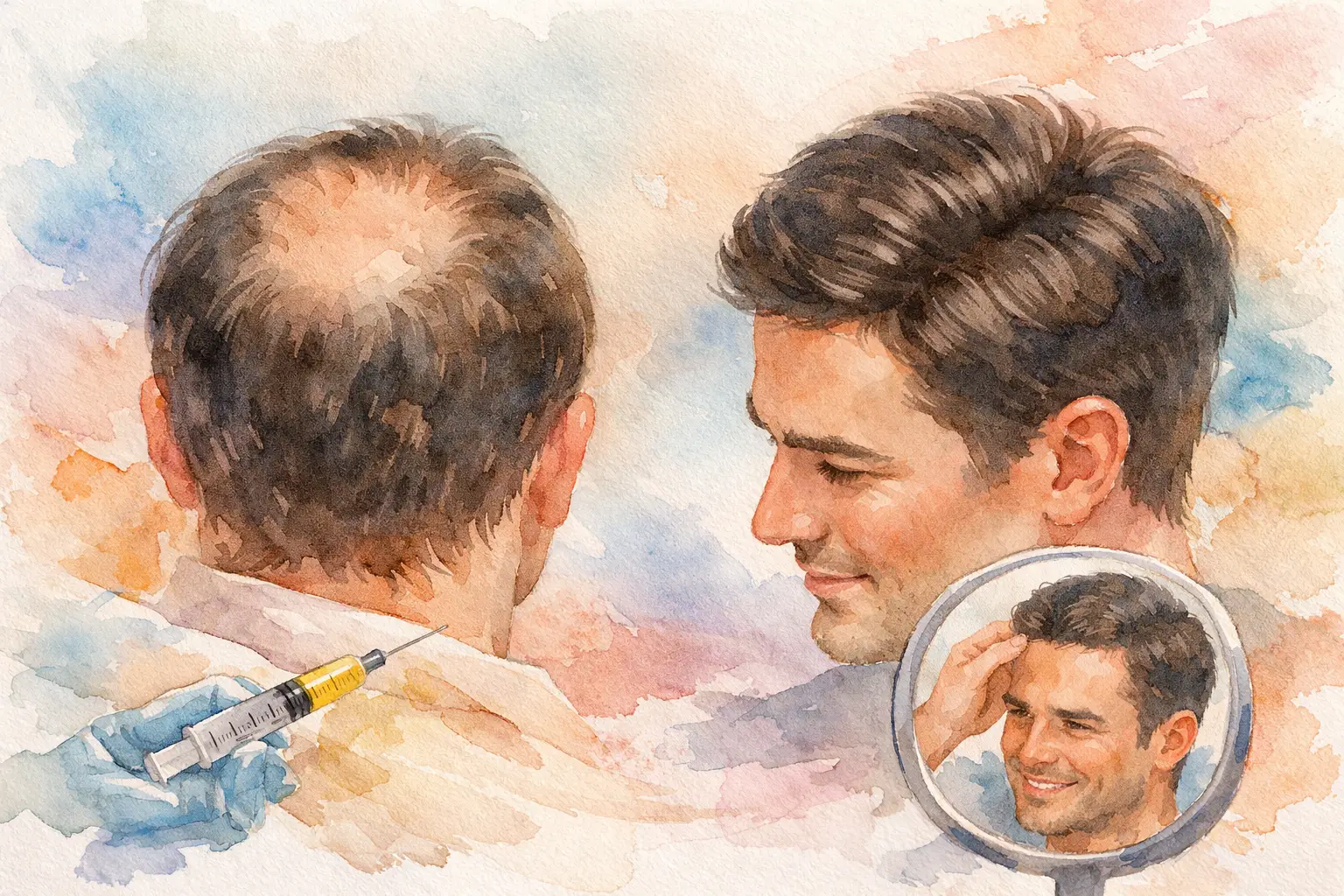
Hair thinning rarely feels like a small change. You may notice more scalp showing in photos, a widening part, a receding hairline, or less coverage when you style your hair. PRP hair restoration results can offer a meaningful, non-surgical option for people whose hair follicles are still active and producing finer, weaker strands. The goal is not an overnight transformation. It is to support healthier follicle activity so your existing hair can look thicker, stronger, and more resilient over time.
For many adults in Colorado Springs, that matters because hair loss can affect far more than appearance. It can change how you feel in professional settings, social situations, and your everyday routine. A thoughtful PRP plan is designed to meet that concern with medical-grade care, realistic expectations, and a path that fits a busy life.
What PRP Hair Restoration Results Can Improve
PRP stands for platelet-rich plasma. During treatment, a small amount of your blood is collected and processed to concentrate platelets and growth factors naturally present in your body. That platelet-rich plasma is then carefully placed into areas of thinning on the scalp.
The treatment is intended to create a healthier environment around vulnerable hair follicles. When follicles are dormant or miniaturizing rather than permanently inactive, PRP may help improve hair caliber, density, and shedding patterns. Clients often pursue it for early to moderate thinning, including a widening part, diffuse thinning through the crown, or early recession around the hairline.
The results people notice vary. Some see less shedding first. Others begin to see their hair feel easier to style because it has more body at the roots. With continued treatment, fine hairs may appear fuller and existing strands may grow in with improved thickness. The most successful outcome is often a gradual return to better coverage, not a completely new head of hair.
That distinction matters. PRP is not a hair transplant, and it does not create follicles where none remain. If an area of the scalp has been smooth and bare for years, the potential for visible regrowth may be limited. A consultation helps determine whether PRP is appropriate for your pattern and stage of hair loss.
When to Expect PRP Hair Restoration Results
Hair growth works on a biological timeline, so patience is part of the process. It is common to need a series of initial treatments, often spaced about four to six weeks apart, before moving into a maintenance schedule. Your provider will recommend timing based on your hair loss pattern, health history, and response to treatment.
In the first several weeks, there may be no dramatic visible difference. Hair cycles slowly, and treatment-related changes need time to move through that cycle. Some clients report reduced shedding or a healthier scalp feeling within the first couple of months, but visible improvements in density typically take longer.
Many people begin evaluating early changes around three to four months. More noticeable PRP hair restoration results may develop between six and 12 months, especially when treatment is completed consistently. Progress photos taken in the same lighting, with the same part and angle, are often more reliable than checking the mirror day to day.
Maintenance matters because genetic hair thinning is usually ongoing. Once you achieve improvement, periodic follow-up treatments may help support the results you have worked for. Think of PRP as a long-term strategy for hair health rather than a one-time appointment.
Why Results Differ From Person to Person
Two people can receive the same treatment and experience different outcomes because hair loss has many causes. Genetics are common, but hormonal shifts, stress, illness, nutritional deficiencies, certain medications, autoimmune conditions, and scalp inflammation can all affect growth and shedding.
PRP tends to be most promising when treatment begins while follicles are still present. Someone who has recently noticed a widening part may have a different outlook than someone with advanced, long-standing loss. Your age, overall health, platelet quality, smoking status, and consistency with the treatment plan can also influence the response.
For women, hormonal changes associated with postpartum recovery, perimenopause, menopause, or thyroid concerns may contribute to shedding or thinning. For men, pattern hair loss often follows a predictable path at the temples, hairline, and crown. In either case, identifying the underlying contributors can make the plan more effective.
This is where an individualized approach is valuable. A provider may recommend discussing lab work, hormone health, nutrition, or medical management with the appropriate clinician when your symptoms suggest a broader issue. PRP can be an important part of the plan, but it should not distract from a treatable cause of hair loss.
What Treatment Feels Like and What Recovery Requires
PRP hair restoration is performed in the office and does not require surgery or an extended recovery period. After the blood draw and platelet processing, the scalp is treated with a series of precise injections. A topical numbing option may be used to help improve comfort.
Most clients return to work, errands, or family life the same day. You may have mild tenderness, tightness, swelling, or pinpoint redness at the injection sites for a short time. Your provider will give you personalized aftercare instructions, which may include avoiding strenuous exercise, excessive heat, or hair washing for a brief period.
Because PRP uses a concentrated portion of your own blood, it is appealing to clients who want a natural, non-surgical approach. Still, it is a medical treatment. A qualified provider should review your history, medications, and any conditions that may affect your candidacy before moving forward.
How to Support Healthier-Looking Hair Between Visits
Your daily habits cannot override genetics, but they can support your treatment plan. Avoid tight hairstyles that pull at the roots, harsh chemical processing when your hair is fragile, and frequent high-heat styling. Gentle scalp care and consistent nutrition can also make a difference in how your hair looks and feels.
Protein, iron, vitamin D, zinc, and other nutrients play roles in normal hair growth, but supplements are not automatically the answer. Taking high doses without guidance can be unhelpful or even counterproductive. If you suspect a deficiency, ask a medical professional about appropriate testing and recommendations.
You may also be a candidate for combination care. Depending on your needs, a provider may discuss topical or oral therapies, scalp-focused treatments, microneedling, or wellness support that addresses hormonal and lifestyle factors. Combining therapies is not necessary for everyone, and more treatment is not always better. The right plan is the one that matches the reason for your hair loss, your comfort level, and your goals.
Is PRP Right for Your Hair Loss?
The best candidates are often people who have noticed recent thinning and want to take action before it progresses. You do not need to wait until hair loss becomes severe to ask questions. Earlier evaluation can provide more options and a clearer baseline for measuring change.
At Reveal MedSpa, hair restoration care begins with listening to what you have noticed, what you hope to improve, and what may be influencing your hair health. From there, your provider can help you understand whether PRP makes sense, what a realistic timeline looks like, and whether another treatment or referral should be part of the conversation.
Your hair does not need to define your confidence. A professional evaluation can give you clear answers and a personalized next step, so you can move forward feeling informed, supported, and more like yourself again.