

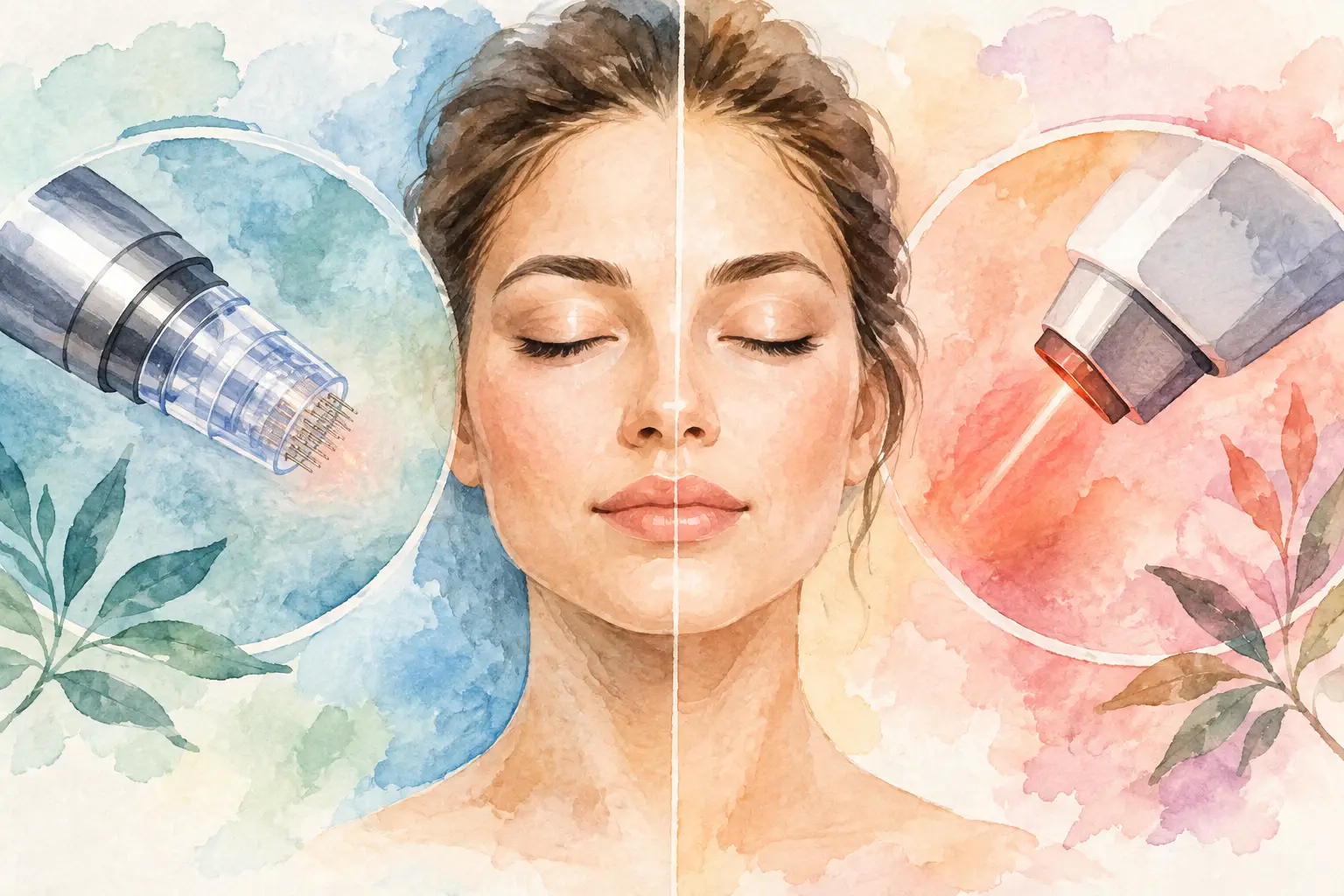
A photo can make a skin concern feel more noticeable than it did yesterday. Maybe it is the acne scar you have learned to angle away from, crepey texture around the eyes, or sun damage that no longer responds to your favorite skincare. When considering RF microneedling versus laser resurfacing, the right choice is not always the treatment with the most dramatic reputation. It is the one that matches your skin goals, lifestyle, skin tone, and comfort with downtime.
Both treatments stimulate renewal and can create meaningful improvement in texture, tone, fine lines, and scars. They get there differently, though. Understanding that difference can help you choose a plan that feels realistic and leaves you feeling more confident in your skin.
RF Microneedling Versus Laser Resurfacing: The Core Difference
RF microneedling combines tiny, controlled needles with radiofrequency energy. The needles create precise microchannels in the skin while radiofrequency heat is delivered into deeper layers. That controlled injury signals the body to build new collagen and elastin, which support firmer, smoother-looking skin over time.
Laser resurfacing uses focused light energy to heat or remove targeted layers of skin. Depending on the laser and settings, it may work closer to the skin’s surface, deeper within the dermis, or both. Ablative laser treatments remove portions of the outer skin layer for more intensive resurfacing, while non-ablative lasers heat tissue below the surface without removing it.
In simple terms, RF microneedling is often chosen for collagen remodeling with less surface disruption. Laser resurfacing can be an excellent option when the surface itself needs more substantial correction, especially for visible sun damage, etched lines, and more pronounced texture changes.
What RF Microneedling Can Treat
RF microneedling is a versatile choice for people who want gradual, natural-looking skin renewal without a lengthy recovery period. It is commonly used to improve acne scars, enlarged pores, mild to moderate wrinkles, uneven texture, laxity, and early signs of aging along the jawline, cheeks, neck, or chest.
Because the energy is delivered beneath the surface, RF microneedling can be appropriate for a broader range of skin tones than some laser procedures. That does not mean every device, setting, or concern is right for every person. A skilled provider still needs to assess your skin tone, history of discoloration, active skin conditions, and treatment goals before making a recommendation.
Most clients need a series of treatments, usually spaced several weeks apart. You may see an early healthy glow, but collagen remodeling is a slower process. Improvements often become more noticeable in the weeks and months following treatment as the skin builds new supportive structure.
Downtime after RF microneedling
Expect redness, warmth, and mild swelling that can resemble a sunburn for one to three days. Some people experience pinpoint bleeding during treatment or temporary roughness afterward. Makeup is usually postponed for a short period, and careful sun protection is essential while the skin recovers.
This recovery profile appeals to busy professionals, parents, and anyone who wants meaningful improvement without stepping away from life for a full week or more.
When Laser Resurfacing May Be the Better Fit
Laser resurfacing is often the stronger choice when the primary concern is visible at the skin’s surface. This can include deeper wrinkles, extensive photodamage, rough texture, age spots, certain scars, and changes that have accumulated after years of Colorado sun exposure.
An ablative laser can deliver a more dramatic resurfacing effect because it removes damaged outer tissue while heating the layers beneath. The trade-off is a more involved recovery. Redness, swelling, peeling, crusting, and sensitivity are expected parts of healing, and visible redness can last beyond the first week for some clients.
Non-ablative laser options typically involve less downtime than ablative resurfacing but may require a series of sessions and produce more gradual results. Your provider may recommend this route if you want to address pigment and texture with a recovery schedule that is easier to manage.
Downtime after laser resurfacing
The answer depends heavily on the laser type and intensity. A light, non-ablative treatment may involve a few days of redness. More intensive ablative resurfacing can require one to two weeks of social downtime, followed by ongoing attention to healing skin and sun avoidance.
This is not a reason to rule laser resurfacing out. It is a reason to plan thoughtfully. If you have a wedding, work presentation, family photos, or a ski trip on your calendar, timing matters. The best treatment plan respects both your goals and your real life.
Results: Dramatic Resurfacing or Gradual Collagen Renewal?
Neither approach is automatically better. The more useful question is what you want to change.
Laser resurfacing can deliver a greater visible change in surface texture and sun-related damage, particularly with ablative treatments. It may be the right fit for someone who is ready for a more intensive procedure and recovery in exchange for deeper correction.
RF microneedling is especially compelling for acne scars, pores, early laxity, and fine lines when you want collagen-focused rejuvenation with less downtime. Results develop gradually, which many clients appreciate because the change looks refreshed rather than sudden.
For some concerns, the best answer is not either-or. A customized plan may include RF microneedling for deeper collagen support and a laser, peel, or facial treatment to address surface brightness and pigment. Treatments should be layered strategically, not rushed together, so your skin has time to respond and recover.
Safety, Skin Tone, and Treatment Planning
Every energy-based treatment should start with an honest skin assessment. Your provider will consider factors such as your Fitzpatrick skin type, melasma or hyperpigmentation history, acne activity, cold sore history, medications, and tendency toward scarring. They should also ask how much downtime you can realistically accommodate.
Laser treatments can be highly effective, but certain lasers and aggressive settings may carry a higher risk of post-inflammatory hyperpigmentation in deeper skin tones or in clients prone to pigment changes. RF microneedling may offer more flexibility for many skin tones because it relies less on targeting pigment at the surface. Still, treatment technique and post-care matter just as much as the technology itself.
Be transparent about recent tanning, sun exposure, retinoid use, isotretinoin history, pregnancy, autoimmune conditions, and any cosmetic treatments you have had recently. Those details help protect your skin and guide safe timing.
How to Choose Between RF Microneedling and Laser Resurfacing
Start with the concern that bothers you most when you look in the mirror. If acne scars, pores, mild sagging, or texture are at the top of the list, RF microneedling may be an excellent starting point. If deep lines, substantial sun damage, or a rough outer skin layer feel like the bigger issue, laser resurfacing may offer the level of correction you want.
Then consider your calendar. A treatment is only a good fit if you can follow the recovery instructions, avoid sun exposure, and give your skin adequate time to heal. More aggressive is not always more effective if it leads you to return to normal activity before your skin is ready.
Finally, think beyond a single appointment. Skin rejuvenation is most successful when it is treated as a plan. Medical-grade skincare, daily broad-spectrum sunscreen, healthy habits, and maintenance treatments help preserve the improvement you invest in.
At Reveal MedSpa, your consultation should feel like a conversation, not a sales pitch. The goal is to understand what you see, what you want to feel, and how to create a medically guided plan that fits your skin and your life. Whether you choose RF microneedling, laser resurfacing, or a carefully timed combination, the right next step is one that helps you feel like yourself again, only more confident.