

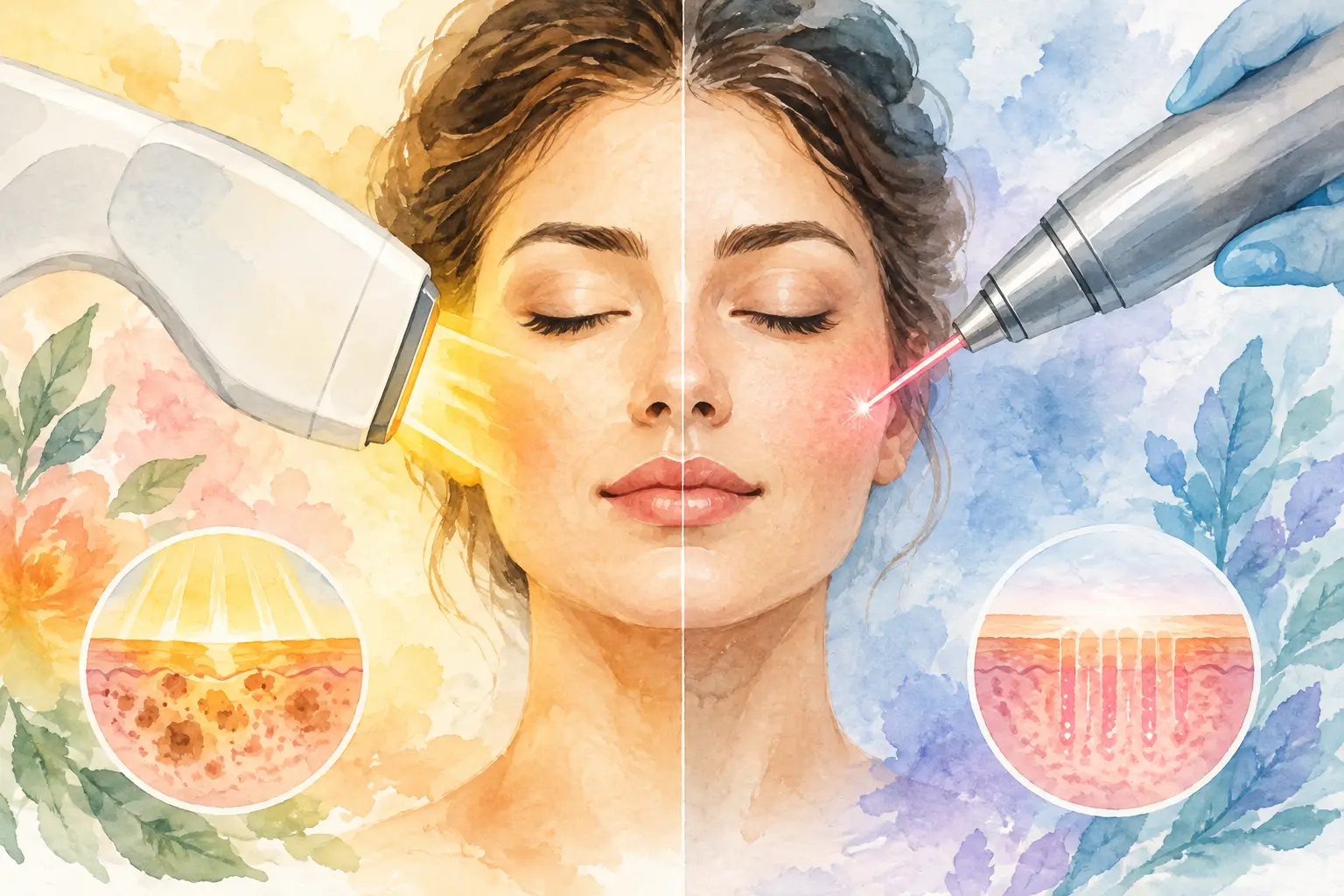
Brown spots that catch your eye in the mirror. Fine lines that makeup settles into. Acne scars that still feel visible long after the breakout has passed. When you are comparing IPL versus laser resurfacing, both treatments can improve the look of aging and sun-damaged skin, but they work in distinctly different ways. The right choice comes down to what you want to treat, your skin tone, your schedule, and how much recovery time feels realistic for your life.
At Reveal MedSpa, treatment planning begins with your goals, not a one-size-fits-all device recommendation. Some clients want a brighter, more even complexion before an event. Others are ready to address deeper wrinkles, texture changes, or scars with a more intensive approach. Understanding the difference helps you make a confident decision.
IPL Versus Laser Resurfacing: The Core Difference
IPL stands for intense pulsed light. Although it is often casually called a laser treatment, IPL is technically not a laser. It uses broad-spectrum pulses of light that are filtered to target pigment and blood vessels near the skin’s surface. This makes it especially effective for concerns tied to sun exposure, including brown spots, redness, visible capillaries, and uneven tone.
Laser resurfacing uses a concentrated beam of a specific wavelength. Depending on the laser and settings selected, it can create controlled injury in the skin to stimulate collagen remodeling and encourage healthier skin to form. Ablative laser treatments remove tiny portions of the skin’s outer layer, while non-ablative options heat tissue beneath the surface without removing as much skin.
Put simply, IPL is often the better match for color concerns. Laser resurfacing is generally the stronger option for texture concerns. There is overlap, but this distinction matters when your goal is meaningful improvement rather than simply choosing the treatment with the shortest name or fastest appointment.
What IPL Treats Best
IPL is a popular choice for clients who want to refresh the appearance of photodamage without significant downtime. It can help break up excess pigment and reduce the flushed, uneven appearance associated with redness or visible vessels.
IPL may be recommended for sun spots, freckles, age-related pigment, facial redness, rosacea-related flushing, broken capillaries, and a dull or uneven complexion. It can also support a clearer-looking chest, neck, or hands when those areas show signs of cumulative sun exposure.
Following treatment, darker spots may temporarily look deeper in color before they flake away or fade. Mild redness and a warm sensation are common, often resolving within a day or two. Most clients can return to work, errands, and social plans quickly, provided they follow aftercare instructions and stay diligent about sun protection.
The trade-off is that IPL does not resurface the skin in the same way an ablative laser can. If pitted acne scars, pronounced crepey texture, or deeper etched lines are your primary concern, IPL alone may not create the level of change you are hoping to see. A series of treatments is commonly recommended, and results build gradually.
When Laser Resurfacing Makes More Sense
Laser resurfacing is designed for clients seeking a more dramatic skin renewal treatment. By stimulating the skin’s healing response and collagen production, it can soften fine lines, improve rough texture, reduce the appearance of acne scarring, and create a smoother, firmer-looking complexion over time.
Ablative laser resurfacing can be particularly valuable for more advanced concerns, such as deeper wrinkles around the mouth and eyes, significant sun damage, or textural irregularities that have not responded enough to lighter treatments. Because it is more intensive, it also involves more visible recovery. Redness, swelling, peeling, and sensitivity are expected parts of the healing process, and downtime can range from several days to a couple of weeks depending on the treatment depth and area.
That recovery is not a downside for everyone. For a client who has the flexibility to heal and wants substantial improvement in one treatment plan, it may be a worthwhile investment. But it does require planning. You will need to avoid direct sun exposure, use prescribed skincare as directed, and give your skin the time it needs to repair.
Non-ablative laser options may offer a middle ground. They can support collagen production with less downtime than ablative resurfacing, though they may require multiple sessions and typically produce more gradual results. During a consultation, the provider can help determine whether lighter, repeated treatments or a more intensive resurfacing plan better fits your goals.
Downtime, Comfort, and Results: What to Expect
Your calendar matters. IPL is often easier to fit into a busy Colorado Springs lifestyle because the social downtime is minimal. You may look slightly flushed after treatment, and pigment can darken temporarily, but many people feel comfortable resuming normal activities quickly.
Laser resurfacing asks more of your schedule, especially with ablative treatments. You may need dedicated recovery time at home, and your skin will require gentle care while it heals. The payoff is often more significant improvement in texture and lines than IPL can provide.
Comfort also differs. IPL typically feels like quick snaps of warmth against the skin. Laser resurfacing can involve more discomfort, so topical numbing and other comfort measures may be used based on the treatment plan. Your provider should clearly explain what the procedure feels like, what recovery looks like day by day, and how to care for your skin afterward.
Neither treatment delivers its final result overnight. IPL improvements often become clearer as pigment lifts and redness settles over the following weeks. Laser resurfacing triggers a longer collagen-building process, meaning skin quality can continue improving for several months after healing.
Skin Tone and Safety Considerations
The safest, most effective treatment is not always the most aggressive one. Skin tone, pigment history, sensitivity, active acne, melasma, current medications, and prior procedures all affect which technology is appropriate.
IPL and certain resurfacing lasers may pose a higher risk of post-inflammatory hyperpigmentation for some deeper skin tones or clients prone to dark marks after irritation. This does not mean treatment is off the table. It means thoughtful device selection, conservative settings, careful pre-treatment preparation, and experienced clinical guidance are especially important.
Melasma deserves special attention. Because heat and light can sometimes trigger melasma, IPL may not be the first choice for every client with patchy facial discoloration. A personalized plan may instead include medical-grade skincare, chemical peels, microneedling, or other options selected for your skin’s needs.
You should also postpone light- or laser-based treatments if you have an active infection, open skin, a fresh tan, or certain photosensitizing medications. Honest consultation questions protect your results and your skin.
Can You Combine IPL and Laser Resurfacing?
Sometimes, yes. Skin aging rarely presents as only one concern. You may have brown spots and redness on the surface along with fine lines and texture changes that call for collagen stimulation. Rather than expecting one procedure to address every issue, a provider may create a staged plan that uses IPL for discoloration and laser resurfacing for texture.
Other complementary treatments can also have a place. Microneedling, RF microneedling, Diamond Glow facials, chemical peels, and medical-grade skincare may help maintain results or address concerns between laser sessions. The order and timing matter. Layering treatments too quickly can compromise the skin barrier, so your plan should be paced around healing and your skin’s response.
How to Choose the Right Treatment for Your Goals
Think less about which treatment is “better” and more about what you want to see when you look in the mirror. If your main concern is uneven pigment, redness, or a sun-weathered complexion with little downtime, IPL may be an excellent starting point. If scars, wrinkles, laxity, or stubborn texture are what bother you most, laser resurfacing may offer a more powerful path forward.
A consultation is where the decision becomes personal. An experienced provider can assess your skin, discuss your history, set realistic expectations, and recommend a plan that respects both your goals and your lifestyle. Your best treatment is the one that helps you feel seen, supported, and more like yourself – with results you can feel confident maintaining.